description: “Discover how swim therapy combined with speech therapy can unlock speech in nonverbal children. Learn about the neuroscience behind aquatic speech therapy at Swim in 1 Day SID Africa, Nigeria’s only integrated adaptive swim and speech therapy practice.”
author: “Swim in 1 Day SID Africa”
date: “2026-08-21”
The Voice in the Water
Why Swim Therapy Is the Missing Key to Unlocking Speech
Swim Therapy + Speech Therapy = Guaranteed Speech!
The idea of pairing swim therapy with speech intervention for nonverbal children may seem absurd at first and honestly, we understand why. When concerned relatives first hear our recommendation, they pause, tilt their heads, and ask a perfectly fair question:
“What does swimming have to do with talking?”
On the surface, the connection isn’t obvious. One is a physical skill movement, breath control, buoyancy. The other is a cognitive and motor achievement sound production, language processing, social communication. They appear to belong to entirely different worlds.
But beneath the surface, literally beneath the water, the connection is not just real. It is profound. And for a child who has been waiting years to find their voice, it might just be the missing key.
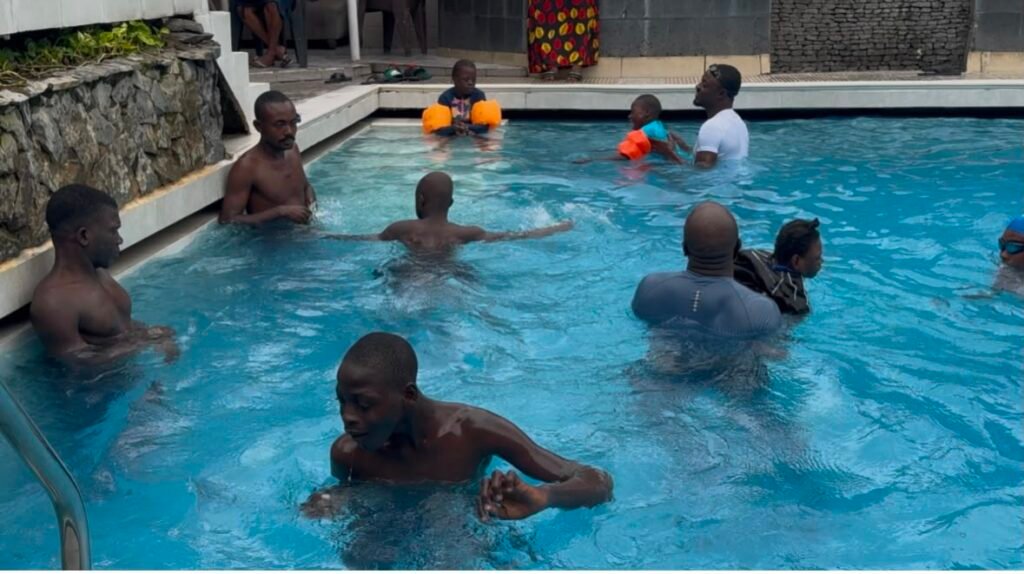
⚠️ Please pay attention as we explain why. The water does something that no classroom, no tablet, and no traditional therapy room can replicate. It prepares the brain and body for speech in ways that land-based therapy alone simply cannot achieve.
Here in *Nigeria, where access to specialized therapy is limited and families often travel hours for a single session, we cannot afford to waste time on approaches that don’t deliver results. *That is why Swim in 1 Day SID Africa has committed itself to a combination therapy model that is not just innovative, it is grounded in neuroscience, backed by emerging research, and producing measurable outcomes for children who were previously told they might never speak.
Let us explain why we are uniquely positioned to deliver this, why it works, and why no one else in Nigeria is doing it the way we do.
Part One: The Science — Why Water Unlocks the Voice
At first glance, swimming and speaking appear unrelated. But they share critical physiological foundations that, when activated together, create a “whole-body” pathway to communication.
Bilateral Coordination & the Corpus Callosum
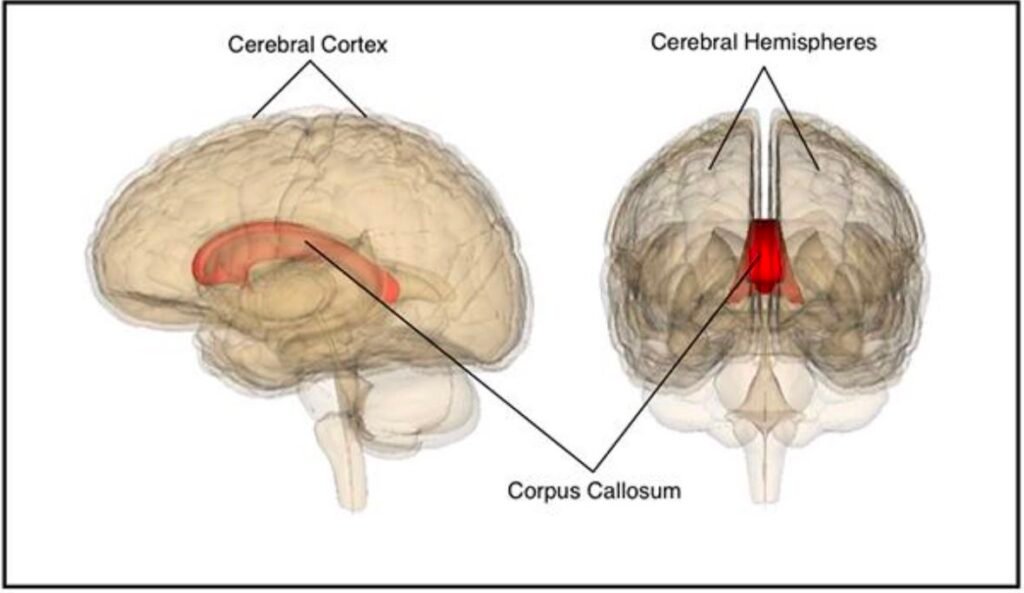
Swimming requires crossing the midline of the body strokes that coordinate both sides simultaneously. This activates the corpus callosum, the neural bridge connecting the left and right hemispheres of the brain.
Why does this matter for speech? Because language processing depends on this same bilateral integration. The left hemisphere typically handles language production, while the right processes prosody, tone, and emotional context. When we activate this pathway in the water, we prime the brain for the complex coordination that speech demands.
Vagus Nerve Stimulation: Calm Alertness
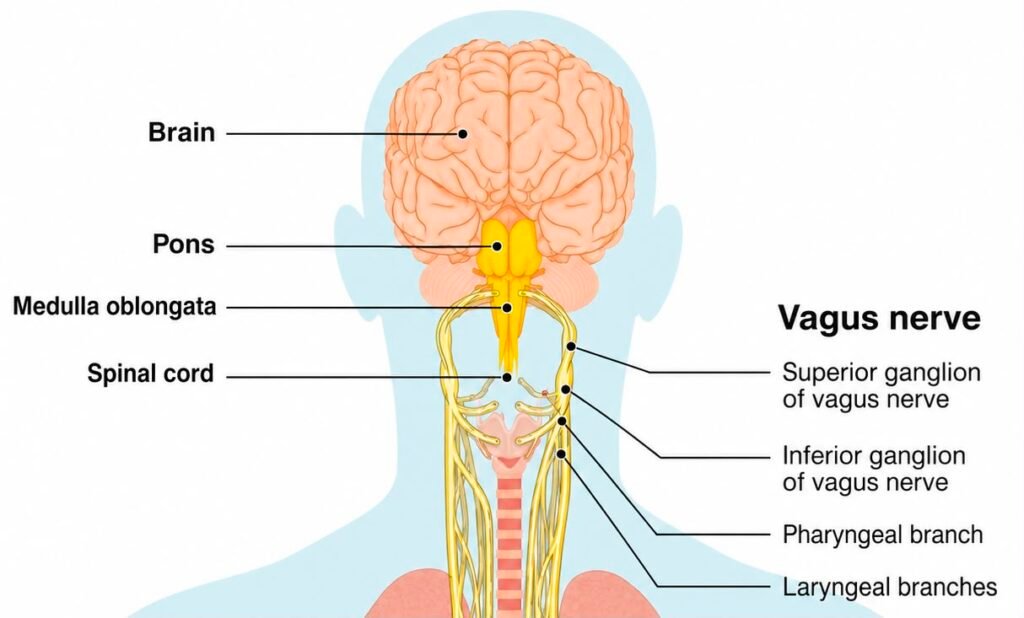
The vagus nerve is the primary highway of the parasympathetic nervous system — our “rest and digest” mode. Cold water exposure (even slightly cool pools) and the deep pressure of immersion stimulate this nerve, inducing a state of calm alertness.
For children with autism or anxiety, this is transformative. When the nervous system is dysregulated, stuck in “fight or flight,” speech is neurologically inaccessible. The water brings them into a state where learning and communication become possible.
Building Breath Support
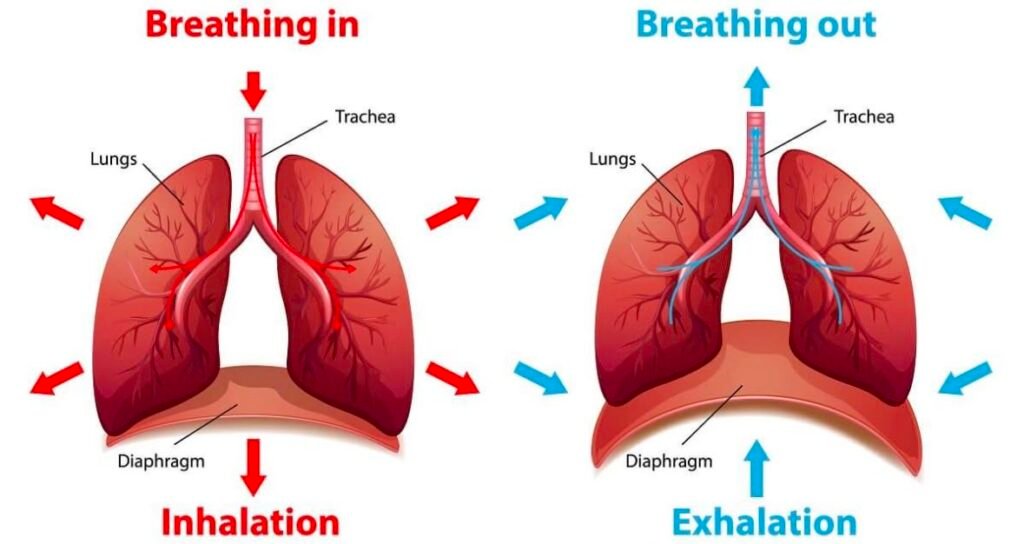
Children with cerebral palsy, apraxia of speech, or global developmental delays often struggle with breath control. Speech requires sustained exhalation and precise airflow.
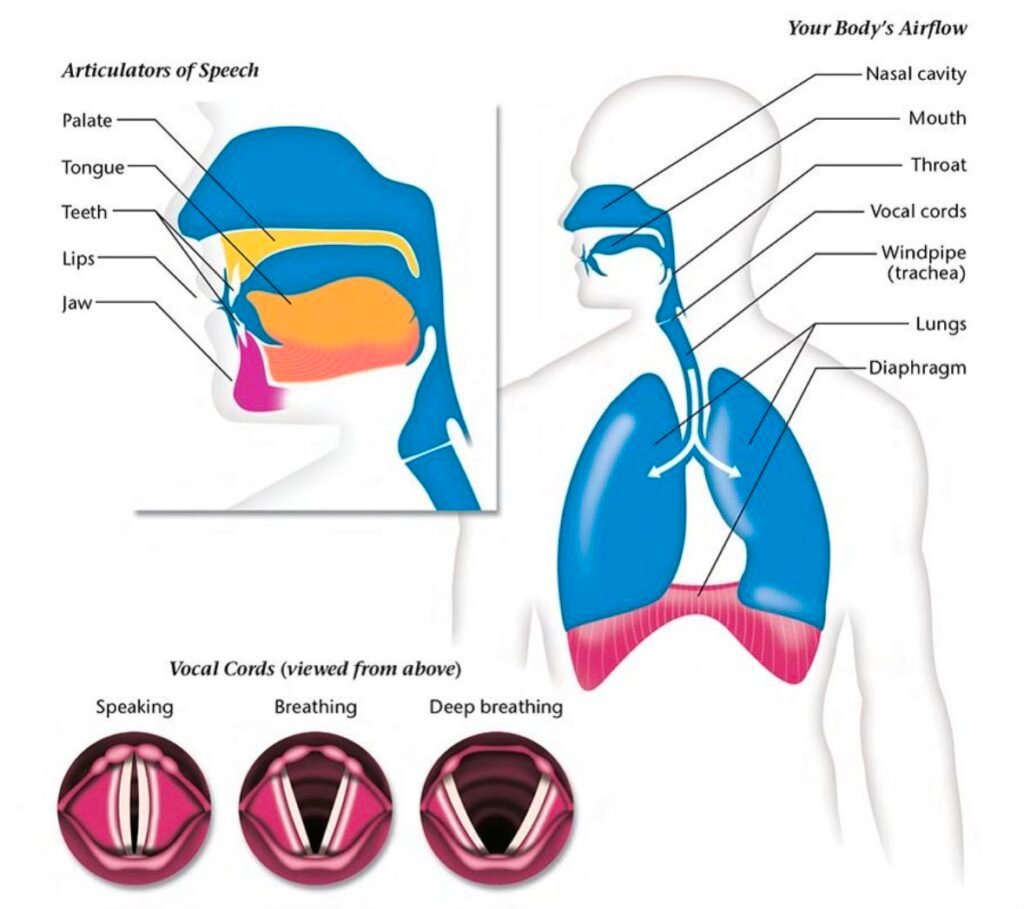
Swim therapy forces controlled exhalation (blowing bubbles) and breath-holding, which directly translates to the respiratory support needed to phonate and articulate.
Research supports this: a 12-week swim training program for adolescents with Down syndrome led to a significant increase in Maximum Phonation Duration (MPD), how long they could sustain a sound. Swim training strengthens the very muscles speech depends on.
Sensory Integration & Regulation
For neurodivergent children with sensory processing challenges, the pool provides deep pressure proprioceptive input the water squeezing the body in a way that is deeply regulating. This reduces fight-or-flight responses and allows the child to focus on facial muscles, eye contact, and the social cues that speech requires.
Part Two: The Evidence — What Research Tells Us
This is not theoretical. The international research is already bearing out what we see in our pool every day.
- The ASLT Program directly compared aquatic versus classroom-based therapy for children with autism spectrum disorder. The findings were striking: water-based intervention resulted in significantly greater improvement in vocabulary measures. The aquatic environment did not just support learning, it accelerated it.
- Parents of children with apraxia frequently report that the 30 to 60 minutes after swimming is the “golden window” the period when their child is most likely to attempt new words or use their AAC device spontaneously. The swim session acts as a neurological warm-up, regulating the nervous system and activating interhemispheric communication.
- When children begin by “muttering words which may not always make sense,” it should never be considered a setback, it is a huge milestone. This vocal play is the foundation for articulation: the brain practicing motor movements in a low-pressure environment before the formal work of speech therapy begins.
Part Three: Our Approach — How Swim in 1 Day SID Africa Does It Differently
In Nigeria, we have seen local swim instructors offer swim lessons. We have seen speech therapists work diligently on land. But we have not seen anyone effectively integrate the two in a way that leverages the neurological priming we have described.
And here is the reality, one we do not say with pride, but with a deep sense of responsibility: For now, we are not just the only swim, sea, and aquatic therapy practice in Nigeria capable of offering this integrated approach. We are also the only Adaptive Swim Instructors in the country capable of teaching every form of disability to swim, and to do so at the fastest rate possible.
This is not a claim we make lightly. It is a reflection of years of specialized training and practice, a deep understanding of neurodivergent physiology, and an unwavering commitment to families who have often been told that their child’s limitations are permanent. We know differently.
Where others see barriers, we see pathways. Where others teach stroke technique, we teach the nervous system. Where others offer recreation, we deliver transformation.
We are not simply the first to do this in Nigeria. We are, for now, the only ones equipped to do it at all.
That is what sets us apart in Nigeria.
Sequential Therapy: Swim, Then Speak
We advocate strongly for what we call the Sequential Model:
30+ minutes Swim Therapy → Immediate Speech Therapy → Golden Window Unlocked
We seek Speech Therapists willing to partner to deliver this as well.
Why sequential rather than integrated? Because the swim session primes the brain, and the golden window opens immediately after. The child is regulated, focused, and motor-ready. Their large muscle groups have been engaged (reducing stimming and involuntary movements), allowing finer motor control of the mouth. Their nervous system is calm, their breath support is strengthened, and their brain is literally more prepared to process and produce language.
Medically Informed Instruction
We are not teaching just recreational swimming. Our founder is equipped to train and certify Adaptive Swim Instructors who are “medically informed” to deliver desired outcomes. They understand tone management, breath control, sensory regulation, and the specific needs of children with autism, cerebral palsy, Down syndrome, and global developmental delays.
Standard swim lessons focus on stroke technique and water safety. Swim therapy focuses on the nervous system and much more, like harnessing the power in the water to provide relief, comfort, and healing. The difference is not subtle, it is the difference between a child learning to float and a child learning to speak and thrive beyond regular societal expectations and barriers.
A Controlled, Joyful Environment
We create an environment specifically designed to increase excitement, fun, and the desire to communicate. When a child is joyful, their brain releases dopamine — the neurotransmitter associated with motivation and learning. This state of arousal makes them more willing to attempt sounds, gestures, and words.
The controlled environment reduces anxiety through water’s sensory properties. The fun provokes the desire to speak. And we capture that window before it closes.
Part Four: By Diagnosis — SID Africa’s Recommendations
Nonverbal Autism
Focus: Regulation and Joint Attention
Water provides a sensory diet that prevents meltdowns. Our therapists use the pool to work on turn-taking (“jump, then I jump”) and gestural communication, precursors to verbal speech. The white noise of the pool filters out auditory distractions, and the structured routine helps organize the brain to process instructions.
Cerebral Palsy
Focus: Breath Support and Postural Control
Buoyancy reduces the effects of spasticity, allowing the child to achieve neutral head alignment that is often impossible on land due to high muscle tone. To speak clearly, the head and neck must be stable. The pool allows us to work on vocalization without the child fighting gravity.
Global Neurodivergence (ADHD, SPD, etc.)
Focus: Executive Function and Auditory Processing
The structured routine of swimming helps organize the brain. The water filters out noise. The physical activity reduces excess energy, allowing the child to sit still and focus during the speech session that follows.
Part Five: The Bottom Line — Why We Are the Best Choice in Nigeria
Let me be direct.
There are swim schools in Nigeria. There are speech therapists. There are occupational therapists. But there is only one practice that combines all three with a medically informed, research-backed, sequential model designed specifically for nonverbal and speech-delayed children.
That practice is Swim in 1 Day SID Africa.
And if you get a Specialized Speech and Occupational Therapist to do a trio combo with us, the outcome could be mind-blowing when you witness your child’s rapid development and independence.
Here Is What Sets Us Apart:
- Certified Adaptive Swim Instructors with training in tone management, sensory regulation, and breath control, not just stroke technique. Our founder’s psychological knowledge and life coaching experience is also a huge advantage that helps understand the uniqueness of each individual and delivery patterns.
- Sequential Integration: We do not just teach swimming and hope speech follows. We intentionally schedule and structure therapy so that the speech session falls within the golden window of neurological priming.
- A Controlled Environment: Our pool is not a public recreational facility. It is a therapeutic space designed for regulation, focus, and safety.
- Measurable Outcomes: We prompt, provoke, and track breath support, vocalization attempts, and vocabulary gains. We do not guess. We measure.
- A Track Record (many testimonies visible on our social media posts): Families who have come to us after years of traditional therapy with little progress are now seeing their children utter their first words, walk for the first time, and engage in turn-taking communication and physical movements never seen before especially in water.
To Conclude: The Voice Has a Pathway
For a nonverbal child whose vocal cords are intact and whose delay is functional rather than structural, the pathway to speech exists. It is not always accessible through traditional methods alone.
Swim therapy does not just teach a child to swim. It *organizes the brain. It **regulates the nervous system. It **builds breath support. It **reduces anxiety. And it opens a window — a *golden window — where the voice has room to emerge.
The Golden Window: The 30–60 minutes after swimming is when your child is most likely to attempt new words, use their AAC device spontaneously, and make breakthrough vocalizations. This is not coincidence, it is neuroscience in action.
At Swim in 1 Day SID Africa, we do not just teach children to float. We use the water as a tool to bring the voice out.
If your child has been waiting for a breakthrough, we invite you to see what happens when therapy meets the water.
Your child has abilities waiting to be discovered, strengths that traditional approaches may have overlooked, a voice that is ready to find its way out.
At Swim in 1 Day SID Africa, we do not see limitations. We see potential. We see the child who will find their voice. The one who will gain confidence. The one whose family will finally hear words they have been waiting years to hear, and take those first steps unlocked by hydrotherapy.
We are proud to be the instrument that lets their light shine, and reveals to the world the superpowers that have always been there.
“Because every child deserves to be heard. And sometimes, the voice emerges not on land, but in water.”
— Swim in 1 Day SID Africa
Ready to Experience the Breakthrough?
Contact Swim in 1 Day SID Africa today. Let us harness the power in water to deliver empowerment to your child like no one else can.
[Contact Us Today] (link to your contact page)
References
- Sourvinos, S., Mavropoulos, A., Kasselimis, D. S., et al. (2021). Brief Report: Speech and Language Therapy in Children with ASD in an Aquatic Environment: the ASLT (Aquatic Speech and Language Therapy) Program. Journal of Autism and Developmental Disorders, 51(4), 1406-1416.
- Casey, A. F., & Emes, C. (2011). The effects of swim training on respiratory aspects of speech production in adolescents with Down syndrome. Adapted Physical Activity Quarterly, 28(4), 326-341.
- Barbosa, E. S., & Silva, S. A. (2026). Transcutaneous Auricular Vagus Nerve Stimulation through Aquatic Psychomotor Practice: Effects on Self-Regulation in Children with Autism Spectrum Disorder. REMUNOM, 4(1).
- Battaglia, G., Agrò, G., Cataldo, P., Palma, A., & Alesi, M. (2019). Influence of a specific aquatic program on social and gross motor skills in adolescents with autism spectrum disorders: Three case reports. Journal of Functional Morphology and Kinesiology, 4(2), 27.
Swim in 1 Day SID Africa — Nigeria’s Only Integrated Adaptive Swim & Speech Therapy Practice. Every Child Deserves to Be Heard.