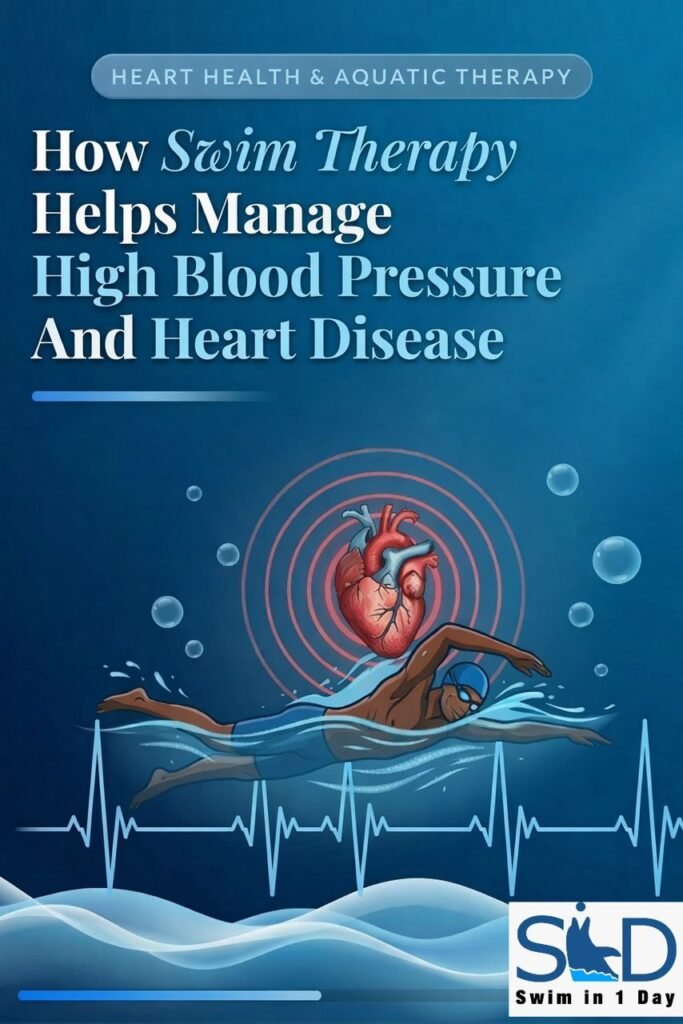
Swim therapy, often referred to as aquatic therapy or regular swimming, is considered one of the best forms of exercise for cardiovascular health. The unique properties of water create an environment that allows the heart and blood vessels to work more efficiently and safely.
Here is how it helps, broken down into the physiological mechanisms and specific benefits:
1. The “Hydrostatic Pressure” Effect: A Natural Compression
This is the most significant factor that sets swimming apart from land-based exercise.
· How it works: When you are immersed in water up to your neck, the water exerts a gentle, evenly distributed pressure on all parts of your body. This is called hydrostatic pressure.
· The benefit for blood pressure: This pressure acts like a full-body compression stocking. It helps push blood from your extremities (legs and arms) back toward your heart. This increases the volume of blood returning to the heart (venous return).
· The result: Because more blood is returning to the heart, the heart doesn’t have to beat as fast to pump blood out to the body. The heart muscle can fill more completely and pump more blood with each beat (increased stroke volume). This leads to a lower heart rate and lower peripheral resistance in the arteries, which directly helps reduce blood pressure.
2. Reduces Peripheral Resistance
High blood pressure is often a result of your arteries narrowing or being stiff (systemic vascular resistance), making it harder for the heart to push blood through.
· How it works: The hydrostatic pressure not only helps blood return to the heart but also helps dilate the arteries in the limbs.
· The benefit: This dilation lowers the resistance against which the heart has to pump. Think of it like a garden hose, if you widen the nozzle, the water flows more easily with less pressure buildup. By lowering this resistance, swim therapy helps to naturally decrease both systolic and diastolic blood pressure.
3. A Cooler, More Efficient Workout
· How it works: Water conducts heat away from the body much faster than air. This prevents the body from overheating during exercise.
· The benefit: Maintaining a cooler core temperature means the cardiovascular system doesn’t have to work as hard to shunt blood to the skin for cooling. This keeps the heart rate lower and more stable compared to exercising on land at the same intensity, making it a safer and more sustainable workout for someone with heart disease.
4. Non-Impact Conditioning for the Heart Muscle
· How it works: Swimming is a true aerobic exercise, meaning it uses large muscle groups (shoulders, back, core, legs) rhythmically for extended periods.
· The benefit:
· Strengthens the heart: Like any muscle, the heart gets stronger with exercise. A stronger heart can pump more blood per beat, meaning it doesn’t have to work as hard (beat as fast) at rest or during activity. This lowers the resting heart rate and blood pressure.
· Improves cardiac output: The body becomes more efficient at delivering oxygen to muscles, which reduces the overall strain on the heart during daily activities.
5. Weight Management and Stress Reduction
These are indirect but powerful benefits for managing heart disease and hypertension.
· Weight Management: Swimming is an excellent calorie burner. Losing even a small amount of weight can significantly lower blood pressure. The buoyancy of water allows overweight or obese individuals to exercise comfortably without stressing their joints, making it easier to stick with a routine.
· Stress Reduction: The rhythmic breathing required for swimming (especially bilateral breathing) has a meditative effect. The sensation of being in water is naturally calming. Exercise releases endorphins, and the aquatic environment reduces sensory input (like noise and light), which helps lower levels of stress hormones like cortisol. Since stress is a major contributor to high blood pressure, this is a crucial therapeutic benefit.
In summary, swim therapy helps with high blood pressure and heart disease by using water pressure to naturally improve circulation, providing a safe environment for aerobic conditioning, cooling the body to reduce cardiac strain, and promoting weight loss and stress reduction.